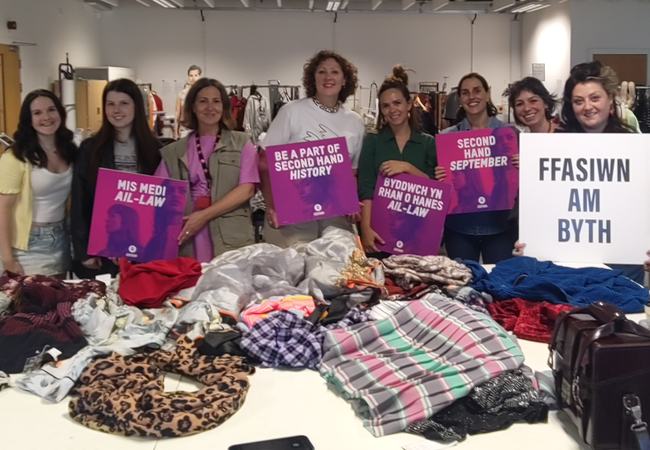
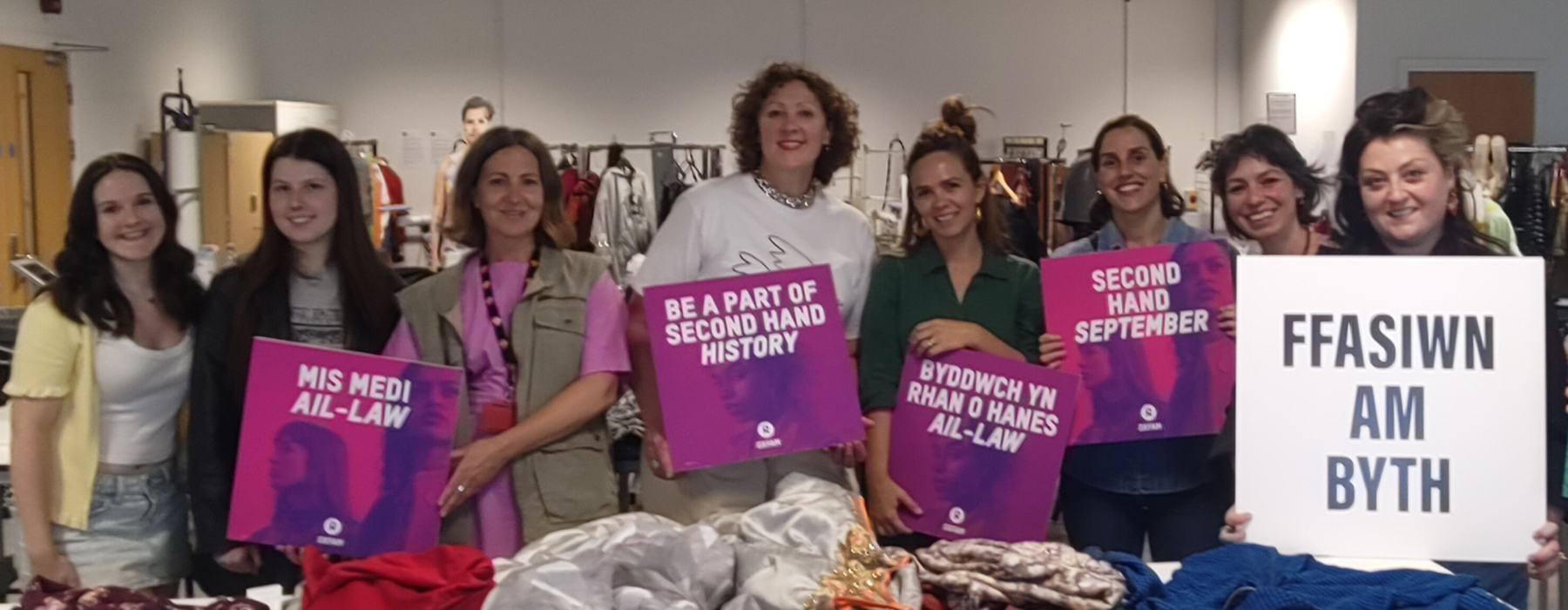
September in Cymru brings the first hint of autumn. Coats come out, jumpers are rediscovered and many of us realise that we already own more clothes than we thought.
That makes it a fitting moment for Oxfam’s Second Hand September campaign. At its simplest, our campaign encourages us to buy second-hand, to donate what we no longer need and give clothes a longer life. But it also asks bigger questions: what kind of economy do we want, how do our daily choices shape the systems around us and affect people and communities at home and abroad, and how can we make sustainable living possible for everyone?
Oxfam’s new State of Style report shows how strongly today’s fashion system pushes us towards constant consumption. Almost two-thirds of people in Britain have bought clothes they weren’t looking for after seeing them on social media, an app, or an online shopping platform. A third of us spend less than ten minutes deciding whether to buy something.
The result? Overflowing wardrobes and an enormous waste of resources. The average wardrobe contains around 80 items, with almost a third having not been worn in the past year. Four in ten people say they have bought an item for a particular occasion, worn it once and never worn it again.
Even an ordinary new T-shirt can require more than 5,000 litres of water to produce. More shockingly, globally, up to 40 per cent of manufactured clothing may never be sold at all.
The water used to make Britain’s unworn clothes would be enough to supply one million people for a lifetime. To put this another way, that’s enough water to supply almost a third of the population of Cymru for their entire lives.
An Unequal Crisis
These figures matter because the environmental costs of what we consume are rarely paid equally.
The hidden cost of our consumption is not measured only in litres of water or tonnes of carbon. It is visible in the poor working conditions and low wages faced by many garment workers, and in the lives and livelihoods being lost as the climate crisis intensifies.
This summer, communities in Nepal experienced the terrible reality of that injustice and of climate breakdown. In August, catastrophic flash flooding swept through communities along the Bhote Koshi and Trishuli rivers. Villages, roads, bridges and other vital infrastructure were destroyed, while contaminated water supplies created an urgent need for clean water, sanitation, shelter and food. More than 1,400 people lost their lives and thousands more are still missing.
Nepal is responsible for only around 0.1 per cent of global emissions. Yet its people are paying a devastating price as a hotter climate increases the risks created by melting glaciers and extreme weather.
That is the meaning of climate injustice. It is the harsh reality that those who have done the least to cause the emergency are suffering its consequences first and worst, while the people with the greatest responsibility often have the most wealth and protection.
Out of Balance
Oxfam’s research shows that the climate crisis is not only accelerating, it’s becoming increasingly unequal. The richest one per cent of the world’s population produce as much planet-heating pollution as the poorest two-thirds of humanity. In the UK, the super-rich produce 56 times more carbon pollution than people on the lowest incomes.
This matters because the impacts of climate breakdown are not felt equally either. From garment workers producing clothes for low wages and often in poor conditions, to communities in countries such as Nepal facing devastating floods and extreme weather, those least responsible for the crisis are too often paying its highest price.
That is why climate action cannot simply be about telling ordinary families to feel guilty about every purchase, journey or meal. Individual choices do matter, but they must be understood in the context of a system that drives overconsumption while concentrating both wealth and pollution in the hands of a few.
Choosing second-hand is a positive and practical step. Donating unwanted clothes to charity is a double win, keeping usable items in circulation whilst also raising money to support communities facing difficulty, poverty and humanitarian crises across the world. But if we are serious about tackling climate injustice, we cannot place the burden on individuals alone. Choosing second-hand is part of the solution, but so is using our voices to support the policies that can tackle the root causes of waste, exploitation and excessive emissions.
System Change
Choosing second-hand is a positive step that any of us can take. But lasting change will require more than individual action. If we are serious about tackling climate change and reducing waste, politicians must create the conditions that make sustainable choices easier, cheaper and more accessible for everyone.
Cymru has already shown ambition in this area through its commitment to becoming a more circular economy, where products are reused, repaired and kept in use for longer. The challenge now is turning that ambition into everyday reality. That means investing in the infrastructure, services and businesses that help reduce waste and make sustainable consumption the norm rather than the exception.
It also means being bold on climate action while ensuring nobody is left behind. Cymru knows what an unjust transition looks like. Communities are still living with the consequences of the rapid decline of the coal industry and the loss of jobs and opportunities that followed. As we move towards a greener economy, we must ensure the benefits are shared fairly through secure green jobs, affordable energy, good public transport and support for communities most affected by change.
Politicians in the Senedd and Welsh Government have an important role to play. They can strengthen support for circular economy initiatives, champion repair, reuse and second-hand markets, and back businesses that place sustainability and ethical production at the heart of their work. They can lead by example through public procurement and policies that reduce waste while supporting good jobs and thriving local communities.
Most importantly, they can demonstrate that individual actions are valued and supported by wider policy change. People are far more likely to make sustainable choices when those choices are practical, affordable and visible in their everyday lives.
Living Second Hand September throughout the year
Second Hand September reminds us that another way of living is not only possible, but already happening. A jacket can be worn by more than one person. A local charity shop can help reduce waste while supporting communities facing poverty, conflict and climate disasters around the world. What may seem like a small act can be part of a much bigger movement for change.
Our choices matter, but they are shaped by the systems around us. That is why personal action must be matched by political ambition: policies that make sustainable choices affordable, accessible and achievable for everyone.
From wardrobes in Cymru to flooded valleys in Nepal, our lives are connected. Climate change does not recognise borders, and neither should our sense of responsibility. The question is not whether Cymru can make a difference. It is whether we are prepared to match our values with our actions, and lead the way towards a future that is both greener and fairer.
A greener Cymru is possible. A fairer Cymru is possible too. But both will require us to think beyond what we consume, and focus on the systems we create, the choices we enable and the future we choose to build together.